Have Questions?
Here at Blanco AC, Electrical & Plumbing, we believe our customers deserve top-quality, long-lasting services. Blanco technicians work with professionalism and transparency to give you the home solutions you need. That’s why we organized this guide to cover some of our most frequently asked questions. When you need services you can depend on, you need Blanco AC, Electrical & Plumbing!
What Is the Difference Between an HVAC System and an Air Conditioner?
An air conditioner is one part of your home comfort system. It cools your home by removing heat and humidity from the indoor air. An HVAC system is broader. HVAC stands for heating, ventilation, and air conditioning, which means it covers both cooling and heating, along with airflow and indoor comfort.
If your home needs AC repair, furnace service, or a full system replacement, Blanco AC, Electrical & Plumbing works on all major makes and models and provides heating and cooling services throughout the Texas Hill Country.
What Maintenance Should I Do on My Air Conditioner?
The most important thing you can do is schedule professional AC maintenance every year before the heavy summer heat arrives.
Between tune-ups, keep the outdoor unit clear of leaves, dirt, and grass, check that supply and return vents stay unblocked, and replace your air filter on schedule.
Regular maintenance helps your system run more efficiently, reduces wear and tear, and can help prevent mid-season breakdowns. Blanco AC, Electrical & Plumbing also offers AC tune-ups and repair service if your system is not cooling properly.
Why Is My Furnace Running but Not Producing Heat?
If your furnace turns on but the air coming out is not warm, a dirty air filter is one of the first things to check because it can restrict airflow and affect performance.
Other possible causes include thermostat issues, ignition or pilot problems, gas supply issues, or condensate drainage problems.
If changing the filter does not solve the problem, it is best to have a professional inspect the system. Blanco AC, Electrical & Plumbing provides furnace repair, furnace installation, and heating tune-up services to restore safe, reliable heat.
What Is the Most Common Problem with a Water Heater?
Two of the most common water heater problems are leaks and failed heating elements. Sediment buildup can also reduce efficiency and shorten the life of the unit over time.
If you notice inconsistent hot water, unusual noises, rusty water, or water around the tank, it is a good idea to schedule service before the issue gets worse.
Blanco AC, Electrical & Plumbing services both traditional tank water heaters and tankless water heaters, including repair and replacement.
What Is Basic Electrical Maintenance for a Home?
Basic electrical maintenance means making sure the parts of your electrical system you rely on every day are safe and working correctly.
That includes checking outlets, switches, breakers, grounding, and panels for signs of wear, damage, or improper operation.
It also helps to have professional inspections done before small problems turn into safety risks. Blanco AC, Electrical & Plumbing offers electrical repairs, electrical installation, panel work, rewiring, surge protection, lighting, EV charging, and other residential electrical services.
Do You Work on Septic Systems?
No. Blanco AC, Electrical & Plumbing does not work on septic systems.
The team can help with plumbing issues leading up to the septic connection, but septic tank and septic system work itself is not part of the company’s listed service offerings.
How Often Should I Change My Air Filter?
That depends on the type of filter your system uses, the size of your household, whether you have pets, and your indoor air quality needs.
Many standard filters should be checked monthly and changed about every 30 to 60 days, while some higher-capacity media filters can last longer.
A dirty filter can reduce airflow, hurt efficiency, and put extra strain on your HVAC system. If you are unsure which filter schedule is right for your home, Blanco AC, Electrical & Plumbing can help during routine maintenance.
How Often Should I Have Maintenance Done on My HVAC System?
Most homes should have HVAC maintenance performed twice a year.
One visit should be scheduled in the spring for your air conditioning system, and one in the fall or early winter for your heating system.
This helps catch wear early, improve efficiency, and keep your system ready for the season ahead. Blanco’s Shield of Protection membership includes two annual precision HVAC tune-ups, one for heating and one for air conditioning.
Do You Offer Water Filtration or Water Treatment Solutions?
Yes. Blanco AC, Electrical & Plumbing offers water softener services, which can help improve water quality and protect plumbing fixtures and appliances from hard water issues.
If you want to improve your home’s water quality, the team can recommend the right solution for your needs.
Do You Offer Ductwork, Duct Cleaning, Indoor Air Quality Services, or Insulation Recommendations?
Blanco AC, Electrical & Plumbing offers air duct repair, air duct cleaning, ductless AC services, and indoor air quality services.
These solutions can help improve airflow, comfort, and the quality of the air inside your home. If you are dealing with dust, uneven temperatures, or poor indoor air quality, the team can inspect your system and recommend the right next steps.
Insulation is not specifically listed on the site, so that service should not be promised in the FAQ.
What Should I Set My Thermostat To?
The best thermostat setting depends on your comfort preferences, your schedule, your home’s insulation, and energy-saving goals.
Many homeowners choose a setting that feels comfortable when they are home, then adjust it a few degrees when they are away or asleep to reduce energy use. A programmable or smart thermostat can make this easier.
If you are struggling with uneven temperatures or high utility bills, Blanco AC, Electrical & Plumbing can inspect your HVAC system to make sure it is operating correctly.
Do You Offer Backflow Prevention Services?
The company’s plumbing pages list a wide range of plumbing services, including repairs, water heaters, drain cleaning, sewer line inspection, water softeners, slab leak repair, and kitchen and bathroom plumbing.
Backflow prevention is not clearly listed by name on the website pages reviewed, so this FAQ should only say yes if the company has confirmed it internally.
Based on the public website alone, it is safer to say homeowners should contact the office directly to confirm availability for backflow prevention and testing.
How Often Should I Clean My AC Drain Line for Preventive Maintenance?
A good preventive habit is to inspect and flush your AC drain line about once a month during heavy cooling season, especially in hot Texas weather where algae and buildup can develop more quickly.
Many homeowners use warm water and vinegar to help keep the line clear, but you should always follow manufacturer guidance and use care to avoid damaging the system.
Professional AC maintenance is still important because technicians can inspect the full condensate system and catch drainage problems early.
What Is the Shield of Protection Membership?
The Shield of Protection Membership is Blanco AC, Electrical & Plumbing’s maintenance plan for HVAC, plumbing, and electrical systems.
It is designed to give homeowners proactive maintenance, priority scheduling, repair discounts, and long-term savings.
HVAC members receive two free precision tune-ups each year, 20% off HVAC repairs, 48-hour priority scheduling, a free diagnostic fee on all trades, and a yearly loyalty credit toward a new system, up to $800 if the membership remains active.
Plumbing benefits include a yearly hot water tank flush, one free plumbing inspection, and 10% off plumbing repairs.
Electrical benefits include one free electrical inspection, 10% off electrical repairs, 48-hour priority scheduling, and a free trip charge.
Do You Provide Financing?
Yes. Blanco AC, Electrical & Plumbing offers financing through several providers, including Synchrony, Wells Fargo Home Projects, Service Finance, and GoodLeap.
The financing page notes features such as simple applications, fast credit decisions, promotional financing options, and convenient monthly payments, with financing subject to credit approval and provider terms.
The Wells Fargo offer on the site also mentions 60-month financing with approved credit on qualifying deluxe and above Trane equipment, with restrictions applying.
Which Areas Do You Serve?
Blanco AC, Electrical & Plumbing serves Blanco and many surrounding Texas Hill Country communities.
The service area page includes places such as Wimberley, Woodcreek, Willow City, Waring, Stonewall, Spring Branch, Spicewood, Sisterdale, Round Mountain, Meadowlakes, Marble Falls, Kendalia, Johnson City, Horseshoe Bay, Henly, Grapetown, Fischer, Eckert, Dripping Springs, Cypress Mill, Cottonwood Shores, Driftwood, Canyon Lake, Cain City, Albert, Bulverde, and Blanco.
The site also lists sister companies for some areas outside the direct service area.
What do I do if I lose power to a section of my home?
Why won’t my circuit breaker reset?
If the breaker trips even with nothing plugged in, that is a wiring issue and it needs a licensed electrician. Do not keep forcing it.
Why does my microwave keep tripping the breaker?
Why does my air conditioner keep tripping the breaker?
What is a GFCI outlet and what does it do?
Why does the GFCI in my kitchen keep tripping?
Does my outdoor outlet have to be on a GFCI?
Why can’t I just replace my breaker with a bigger one?
How hard is it to install a breaker for a hot tub or Jacuzzi?
Can I use a higher wattage LED bulb in my light fixture?
What is an AFCI breaker and do I need one?
Can I change a circuit breaker myself?
How hard is it to replace an electrical outlet?
Why does only half of my house have power?
Why does my light switch make a popping noise?
Why does my 3-way switch turn on when I flip it down?
How long can I use an extension cord?
Do I need to baby-proof my outlets?
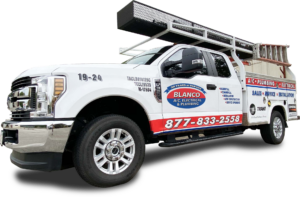
Why Choose Blanco AC, Electrical & Plumbing?
We set our standards high so that you get the service you deserve!

Trane Comfort

Professional

Reliable Quality